Food trucks are commercial kitchens in compact mobile spaces. Learn about fire extinguishers, suppression systems, inspections, and why planning fire protection early can help avoid problems later.
Fire Protection for Food Trucks: What Owners Should Know
A food truck may be smaller than a restaurant, but many of the same commercial cooking hazards exist inside an even tighter space.
Food trucks can combine:
- Fryers
- Griddles
- Cooking oils
- Propane or other fuel sources
- Electrical equipment
- Hot surfaces
- Ventilation equipment
All inside a mobile kitchen where employees may have limited room to move.
That makes proper fire protection an important part of operating a food truck safely.
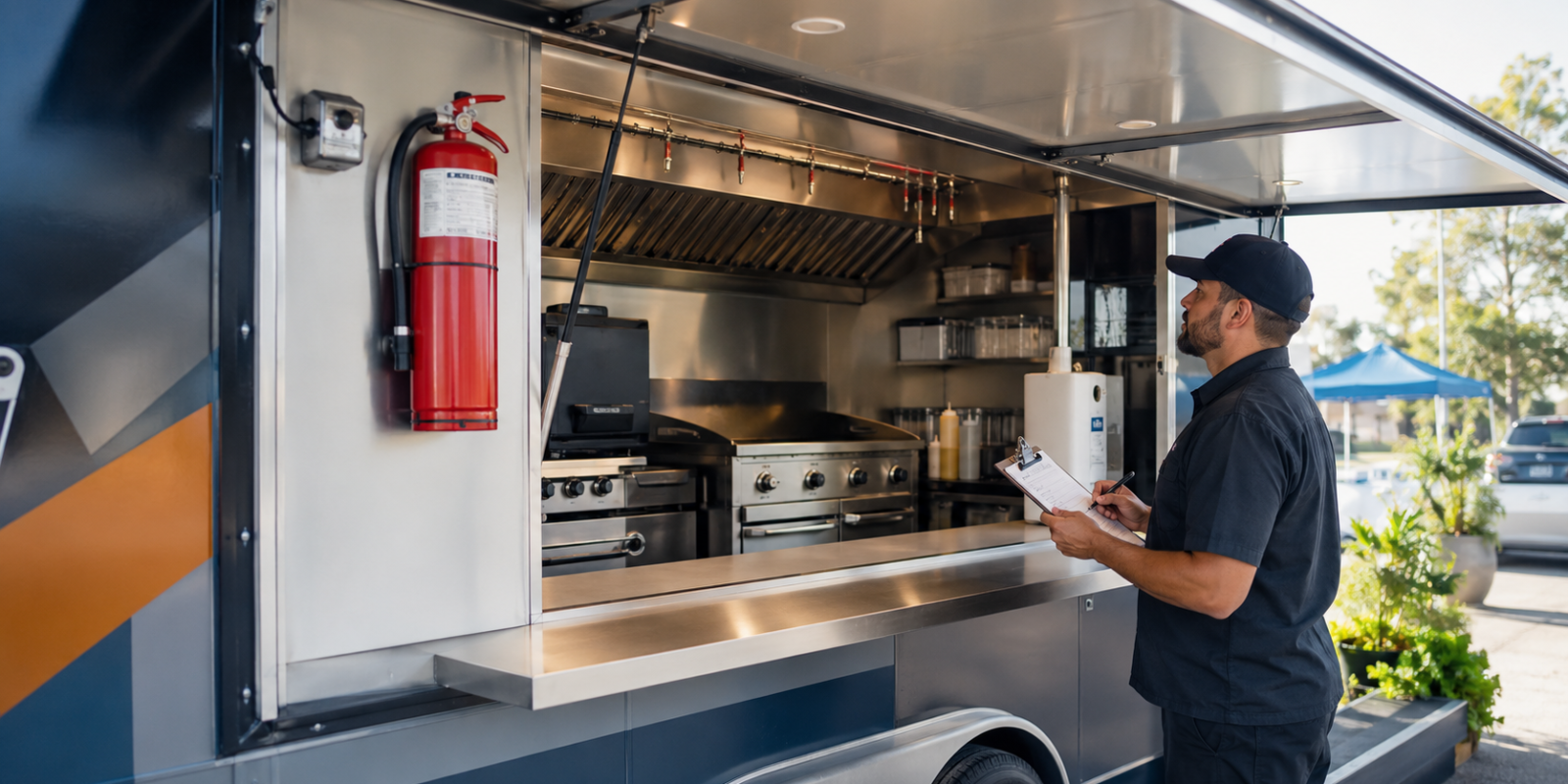
A Food Truck Is Still a Commercial Kitchen
It is easy to think of a food truck as simply a vehicle that serves food.
From a fire-safety perspective, however, many food trucks function as compact commercial kitchens.
The cooking equipment can generate the same types of heat, grease, and fire hazards found inside a restaurant kitchen.
The difference is that everything is concentrated into a much smaller area.
Because of this, fire-protection equipment needs to be selected and positioned carefully.
Fire Extinguishers for Food Trucks
Portable fire extinguishers are an important part of food-truck fire protection.
Depending on the cooking setup, that may include different extinguisher types for different hazards.
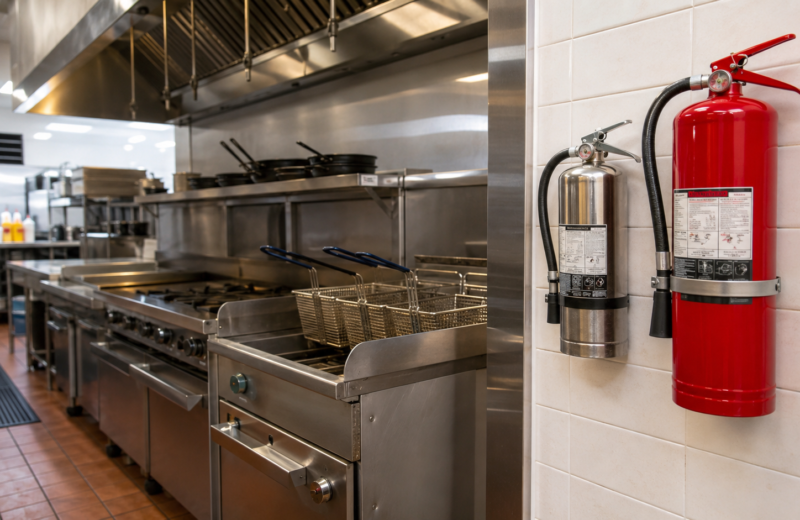
Class K Extinguishers
Class K extinguishers are designed for commercial cooking fires involving cooking oils and fats.
Food trucks using fryers or other grease-heavy cooking equipment may need this type of protection as part of their setup.
ABC Extinguishers
ABC extinguishers provide general-purpose protection for other common fire hazards, including certain combustible materials, flammable liquids, and energized electrical equipment.
Because a food truck contains both cooking and non-cooking hazards, the correct extinguisher setup should be based on the actual equipment and operation.
Compact Fire Suppression Systems
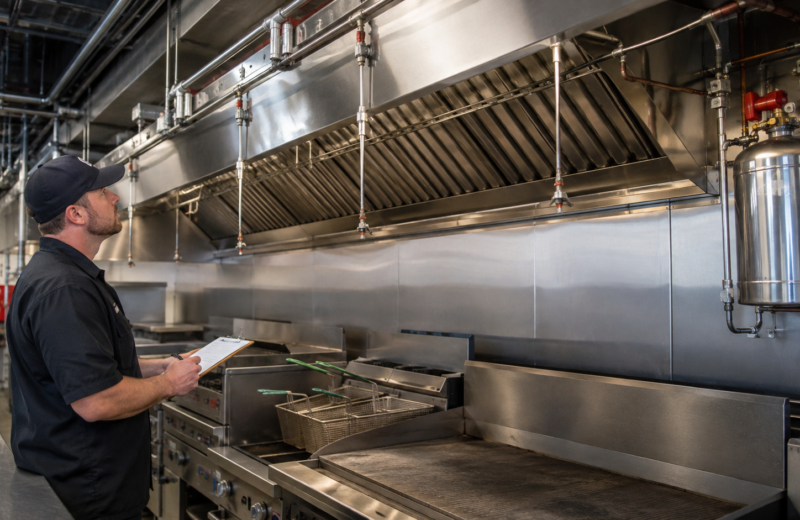
Many mobile kitchens also use automatic fire suppression systems.
These systems can provide targeted protection over cooking equipment while fitting into the limited space available inside a food truck.
Depending on the system, protection may include:
- Automatic detection
- Automatic suppression
- Hood protection
- Cooking-equipment coverage
- Manual emergency activation
- Fuel or electrical shut-off
The system should be designed around the actual cooking line rather than treated as a generic installation.
Space Makes Placement Especially Important
In a restaurant, there may be more room between equipment, storage, and employee work areas.
Inside a food truck, every inch matters.
Fire extinguishers and emergency controls must remain accessible even when:
- Supplies are loaded
- Employees are working
- Equipment is operating
- Doors or service windows are open
- Storage areas are full
Fire-protection equipment should never become buried behind boxes, supplies, or cooking equipment.
New Food Trucks Should Plan Fire Protection Early
If you are building or converting a food truck, fire protection should be part of the planning process from the beginning.
Waiting until the truck is nearly ready to operate can create problems if equipment placement needs to change.
Early planning gives you time to consider:
- Cooking equipment layout
- Hood and ventilation placement
- Suppression-system coverage
- Fire-extinguisher placement
- Emergency controls
- Inspection preparation
It is much easier to address these issues while the truck is being built than after everything has been permanently installed.
Existing Food Trucks Need Ongoing Service Too
Fire protection is not only something to think about when opening a new truck.
Existing operations also need to keep equipment maintained.
Over time, equipment can:
- Become damaged
- Lose pressure
- Be moved
- Become blocked
- Need servicing
- Require updated inspection documentation
Suppression systems should also be inspected and serviced as appropriate.
A fire-protection setup that was correct when the truck opened should still be reviewed periodically.
Preparing for Inspection
One of the biggest concerns for a food-truck owner is preparing the vehicle for inspection.
The safest approach is not to wait until the last minute.
Before an inspection, review the condition and accessibility of fire-protection equipment and make sure required service has been completed.
A professional inspection can help identify areas that may need attention before they become a bigger problem.
No company should promise that a food truck will automatically pass an inspection, because requirements and individual circumstances can vary.
The goal is to arrive prepared and inspection-ready.
Fire Protection Helps Protect More Than the Truck
A food-truck fire can affect more than cooking equipment.
It can also put at risk:
- Employees
- Customers
- Nearby vehicles
- Buildings
- Event spaces
- Business operations
Protecting the truck means protecting the people working inside it and the places where the business operates.
Need Fire Protection for Your Food Truck?
Sergeant Fire & Safety Solutions provides fire-protection services for food trucks and mobile kitchens in the Houston area.
Services include fire extinguisher setup and service, compact fire suppression solutions, inspection support, and maintenance.
Whether you are building a new truck or servicing an existing mobile kitchen, we can help you review your fire-protection needs and prepare your operation.
Contact Sergeant Fire & Safety Solutions today to request a food-truck fire protection consultation.