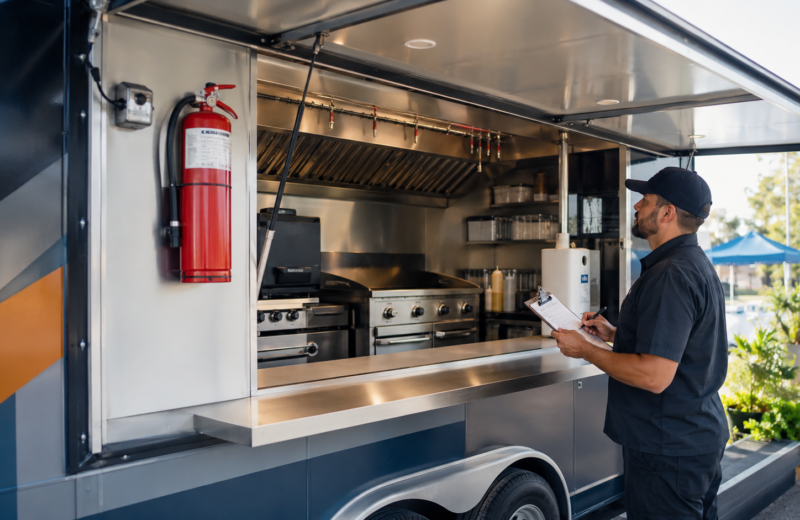
Commercial kitchen fire suppression systems are designed to respond quickly when fire starts around cooking equipment. Learn how hood protection, automatic shut-off, and manual activation work together.
How Kitchen Fire Suppression Systems Protect Commercial Kitchens
Commercial kitchens operate with high temperatures, grease, cooking oils, open flames, electrical equipment, and ventilation systems.
That combination makes fire protection very different from what is typically needed in a home kitchen.
One of the most important systems used in professional cooking environments is the commercial kitchen fire suppression system.
These systems are designed to provide automatic protection around the cooking line and help control a fire before it spreads through the kitchen.
What Is a Kitchen Fire Suppression System?
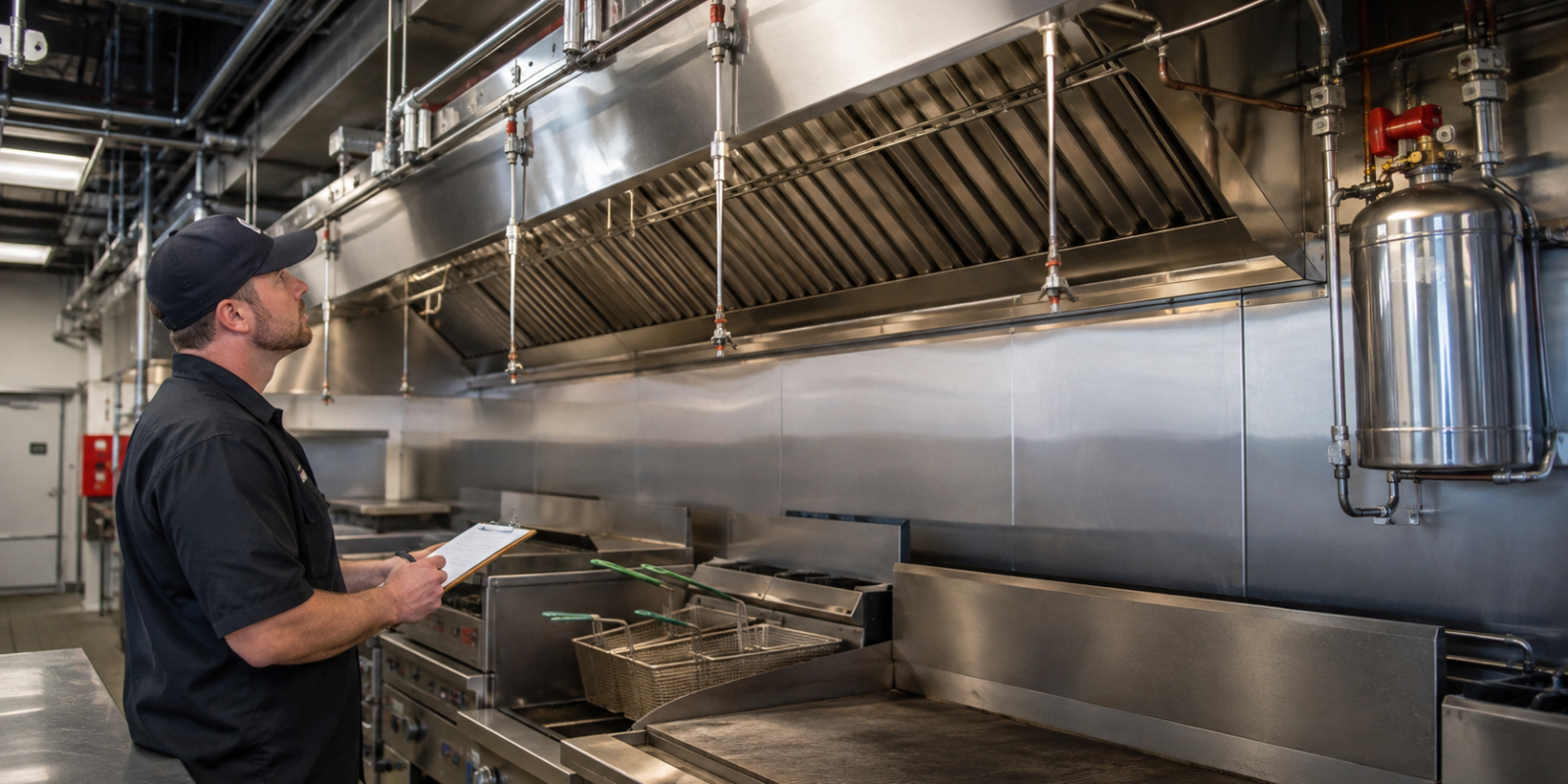
A kitchen fire suppression system is installed around commercial cooking equipment, typically in connection with the exhaust hood and duct system.
The system is designed to detect a fire and release a suppression agent over specific cooking hazards.
Depending on the system and installation, protected areas may include equipment such as:
- Fryers
- Ranges
- Griddles
- Broilers
- Other commercial cooking appliances
The system works as one part of a broader fire-protection setup.
Automatic Detection and Suppression
One of the biggest advantages of a commercial kitchen suppression system is automatic response.
When the system detects conditions associated with a fire, it can activate without waiting for someone to manually operate a fire extinguisher.
Suppression nozzles are positioned over protected equipment so the system can deliver the extinguishing agent directly to the cooking area.
This quick response is especially important in grease-heavy cooking environments where fire can develop rapidly.
Hood and Duct Protection
The danger from a commercial kitchen fire does not always remain at the cooking surface.
Grease can accumulate inside:
- Exhaust hoods
- Filters
- Ductwork
- Ventilation components
If fire reaches these areas, it can spread beyond the original cooking appliance.
A properly designed suppression system provides protection around the hood and duct environment as part of the overall kitchen setup.
Automatic Gas and Electrical Shut-Off
Another important feature of many commercial kitchen fire suppression systems is the ability to shut down fuel or electrical power to protected cooking equipment when the system activates.
Why does this matter?
If heat or fuel continues feeding the fire, suppression becomes more difficult.
Automatically shutting down the affected cooking equipment helps reduce the energy source while the suppression system responds.
Manual Emergency Pull Station
Commercial kitchen suppression systems may also include a manual pull station.
This gives staff a way to activate the system manually when necessary.
The pull station is typically positioned where it can be reached quickly without requiring someone to move directly toward the cooking fire.
Employees should know where the manual activation point is located as part of their workplace safety awareness.
Fire Suppression Does Not Replace Fire Extinguishers
A kitchen suppression system and a fire extinguisher do not serve exactly the same purpose.
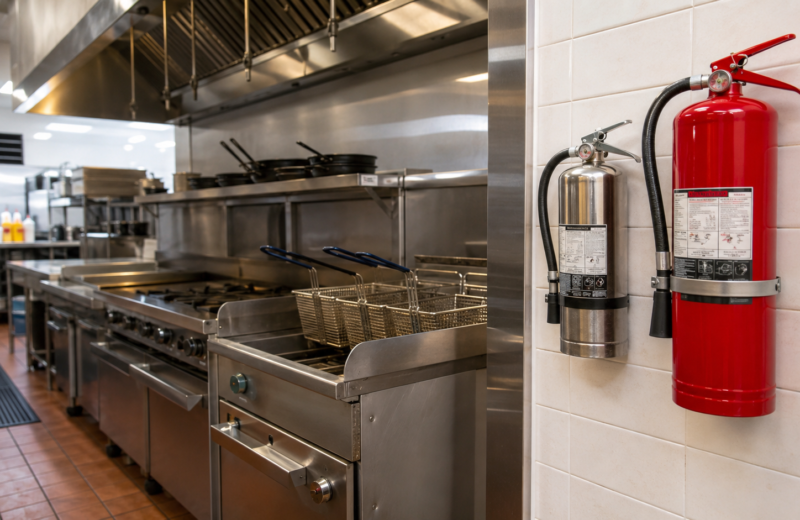
Commercial kitchens may still need appropriate portable fire extinguishers, including Class K and ABC extinguishers depending on the operation.
Think of the fire-protection system as multiple layers:
Automatic suppression protects the commercial cooking line.
Portable extinguishers provide additional protection for appropriate fire hazards.
Together with inspection and maintenance, these systems help create a more complete safety setup.
Why Routine Inspection Matters
A suppression system is installed for an emergency that everyone hopes never happens.
Because the system may sit unused for long periods, routine inspection and service are important.
Inspection may involve checking areas such as:
- System components
- Nozzles
- Detection components
- Manual pull station
- Shut-off functions
- Visible condition
- Service documentation
If equipment is moved or a cooking line changes, the suppression setup may also need to be reviewed.
Restaurant owners should not assume that a system remains appropriate forever simply because it was installed years ago.
Opening or Remodeling a Restaurant?
Suppression planning becomes especially important when:
- Opening a new commercial kitchen
- Replacing cooking equipment
- Changing the cooking line
- Installing a new hood
- Remodeling the kitchen
- Expanding food production
Fire protection should be considered during the planning stage rather than at the last minute.
That makes it easier to coordinate equipment placement and determine what service or installation may be needed.
A Safer Kitchen Starts With the Right System
A professional kitchen depends on more than good cooking equipment.
It also depends on fire protection designed around the hazards created by commercial cooking.
A kitchen suppression system helps protect the cooking line with automatic detection, targeted suppression, hood and duct protection, fuel or electrical shut-off, and manual activation.
Keeping that system properly serviced is an important part of operating a prepared commercial kitchen.
Need Kitchen Fire Suppression Service?
Sergeant Fire & Safety Solutions provides installation, inspection, servicing, and maintenance support for commercial kitchen fire suppression systems in the Houston area.
We work with restaurants and commercial kitchens to help keep fire-protection systems maintained and inspection-ready.
Contact Sergeant Fire & Safety Solutions to request a kitchen suppression consultation or service quote.