Commercial kitchens face different types of fire risks. Learn why Class K and ABC fire extinguishers play different roles and why proper placement, inspection, and maintenance matter.
What Fire Extinguishers Does a Houston Restaurant Need?
Fire extinguishers are one of the most important parts of a restaurant’s fire-protection setup, but not every extinguisher is designed for the same type of fire.
Commercial kitchens combine cooking oils, grease, electrical equipment, heat sources, packaging materials, and other potential hazards in one busy environment. Because of that, restaurants commonly rely on more than one type of fire extinguisher.
Two of the most important types for food-service businesses are Class K fire extinguishers and ABC fire extinguishers.
Understanding the difference can help restaurant owners and managers build a safer and more prepared kitchen.
Class K Fire Extinguishers
Class K extinguishers are designed specifically for fires involving commercial cooking oils and fats.
These types of fires can occur around equipment such as:
- Deep fryers
- Griddles
- Cooking ranges
- Commercial fry stations
- Other high-temperature cooking equipment
Cooking oil fires behave differently from many ordinary fires. High-temperature oils can reignite if they are not handled correctly, which is why commercial kitchens use extinguishers designed specifically for this type of hazard.
For restaurants that perform grease-heavy or high-temperature cooking, Class K protection is an important part of the overall fire-safety setup.
ABC Fire Extinguishers
ABC extinguishers are general-purpose fire extinguishers designed for several common fire hazards.
They are commonly used for fires involving materials such as:
- Paper
- Cardboard
- Wood
- Certain plastics
- Flammable liquids
- Energized electrical equipment
A restaurant contains many areas outside the immediate cooking line where these types of hazards may exist.
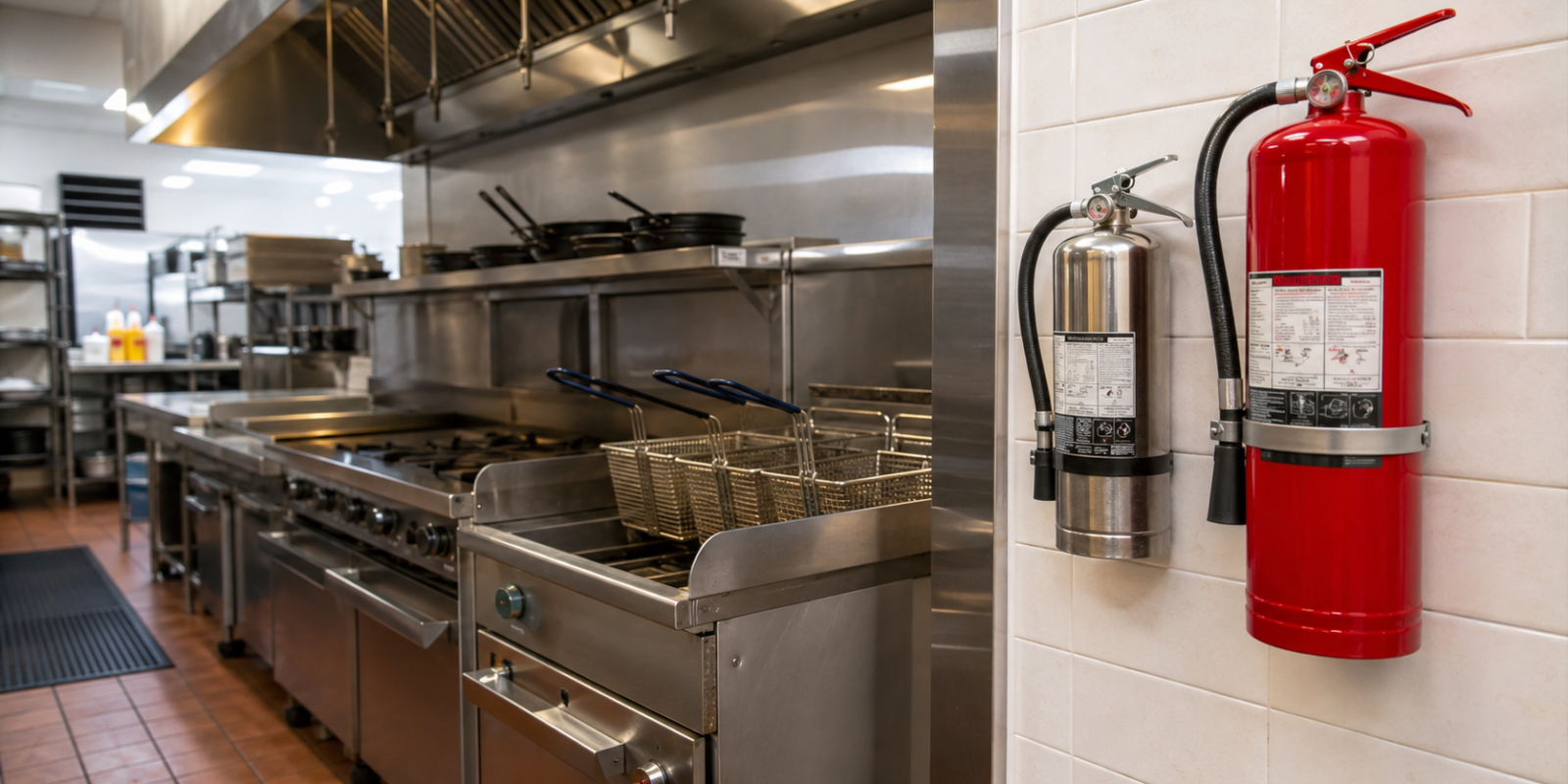
That is why a commercial kitchen may use both Class K and ABC extinguishers, with each serving a different purpose.
Why One Extinguisher Is Not Enough for Every Hazard
A common mistake is assuming that one fire extinguisher can handle every possible type of fire.
In a restaurant environment, the hazard near a fryer is not necessarily the same as the hazard in a storage area, office, electrical room, or front-of-house space.
The correct extinguisher setup depends on factors such as:
- Cooking equipment
- Kitchen layout
- Type of fuel or energy used
- Size of the facility
- Other combustible materials present
- Applicable inspection and safety requirements
This is why commercial fire protection should be planned around the actual operation rather than treated as a one-size-fits-all purchase.
Proper Placement Matters
Having the right extinguisher is only part of the job.
Fire extinguishers also need to be positioned so they are:
- Visible
- Accessible
- Properly mounted
- Easy to identify
- Not blocked by equipment or storage
In an emergency, employees should be able to locate the correct extinguisher quickly.
A professional fire-protection assessment can help determine where extinguishers should be installed based on the layout and use of the space.
Inspection and Tagging
Fire extinguishers also require routine inspection and servicing.
During an inspection, a technician may review items such as:
- Physical condition
- Pressure status
- Hose and nozzle condition
- Accessibility
- Safety pin and seal
- Inspection tag
- Evidence of damage or discharge
An extinguisher that looks fine from a distance may still need service.
Routine inspection helps identify problems before an emergency occurs and helps keep documentation current.
What About New Restaurants?
If you are opening a new restaurant, it is better to think about fire protection early in the setup process.
Waiting until the final stages of opening can create unnecessary delays if equipment needs to be installed, moved, serviced, or added.
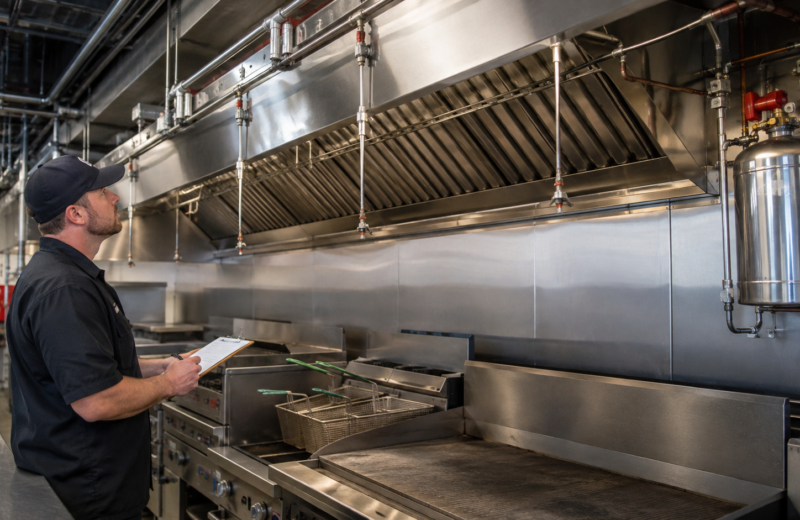
Fire extinguishers should be considered alongside other kitchen safety systems, including commercial hood suppression.
Fire Extinguishers Are Only One Part of Kitchen Protection
A commercial kitchen fire-safety plan may include several layers of protection.
Depending on the operation, that can include:
- Class K fire extinguishers
- ABC fire extinguishers
- Kitchen fire suppression systems
- Hood and duct protection
- Manual emergency pull stations
- Routine inspection and maintenance
Each component serves a different purpose.
The goal is not simply to have equipment on the wall. The goal is to keep the kitchen protected, prepared, and properly maintained.
Need Help With Fire Extinguishers?
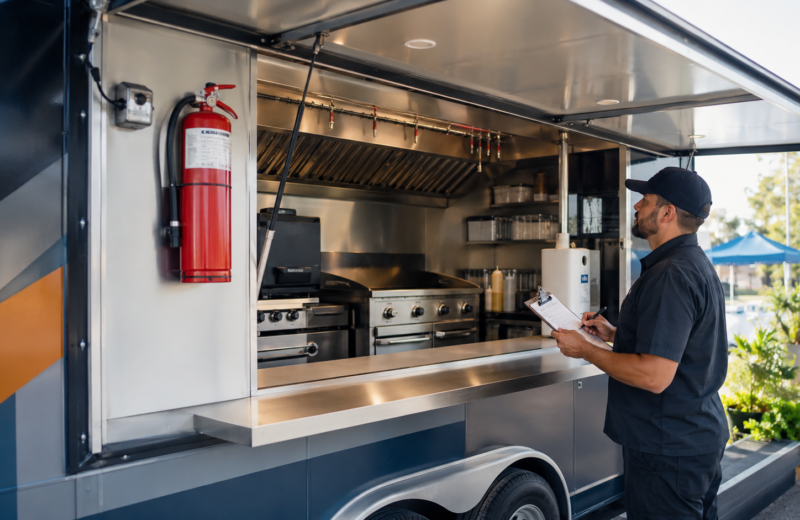
Sergeant Fire & Safety Solutions provides fire extinguisher sales, installation, inspection, tagging, and maintenance for restaurants, food trucks, and commercial kitchens in the Houston area.
Whether you are opening a new restaurant or servicing an existing operation, we can help you review your fire-protection setup and determine what may need attention.
Request a consultation today and keep your kitchen protected and inspection-ready.